
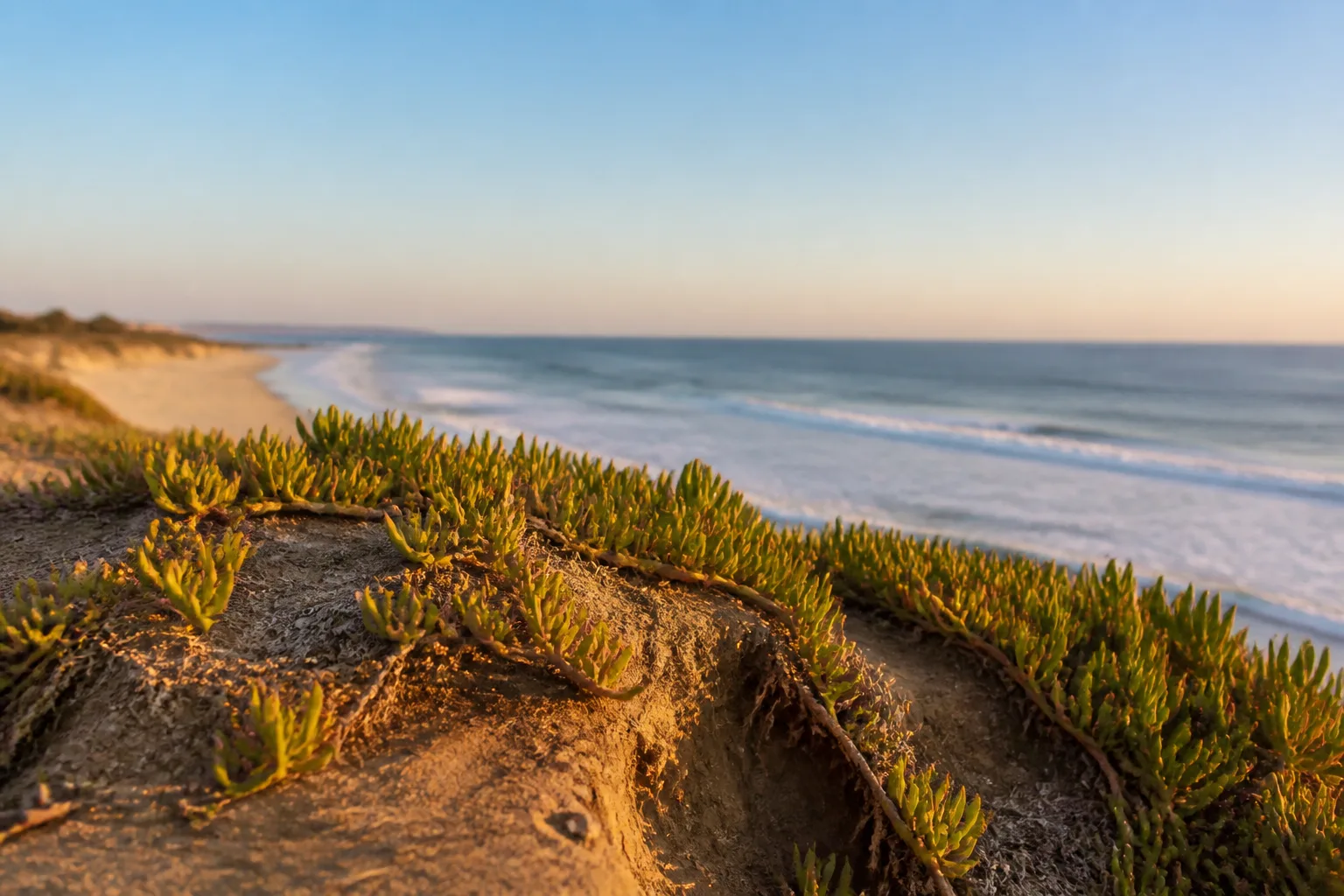
California Beaches Face Threat from Invasive Ice Plant, Environmental Group Urges Action
This summer, California’s sandy shores are under siege from a quiet but relentless invader: the ice plant. In a recent warning, Mossy Earth—a local environmental advocacy group—has urged beachgoers to spot and report the succulent before it blankets dune habitats along the state’s coastline.
The ice plant, known scientifically as Carpobrotus edulis and colloquially as sea fig, is a South‑African native that thrives in California’s coastal climates. It spreads by forming dense, low‑lying mats of fleshy leaves that can cover vast stretches of sand. According to Mossy Earth, the plant reproduces with alarming efficiency, and left unchecked it can replace native vegetation entirely. The resulting mats alter dune structure, crowd out species better adapted to the local environment, and make restoration more labor‑intensive and costly.
The species first appeared in California in the early 1900s as an erosion‑control measure along railroad tracks and later on Caltrans roadsides. Over the decades it has expanded into dune communities, where it competes aggressively with native plants. The California Department of Fish and Wildlife lists ice plant among the state’s invasive species, and the California Invasive Species Council has documented its spread along the coast.
Coastal dunes are more than picturesque sand dunes; they stabilize shorelines, provide habitat for specialized native plants and animals, and act as natural buffers against wind and storm erosion. When ice plant dominates a dune, it reduces plant diversity, weakens the dune’s structural integrity, and increases vulnerability to wind and wave action. The loss of native vegetation also diminishes the dune’s ability to trap and retain sand, accelerating dune erosion.
To help the public recognize the threat, Mossy Earth released a short restoration demo that shows how to identify ice plant. The video highlights the plant’s distinctive fleshy leaves and sprawling growth habit. The organization also shared comments from beachgoers who have observed the plant in several California locations.
One commenter posted on social media, “Oh those have taken over the dunes near SF, Monterey, and Pescadero/Santa Cruz (California, US). Always a bit sad to see it.” Another added, “These things were ALL over the beach dunes at San Francisco. I haven’t been there in a while, but I’d assume they’re still there.” These posts illustrate that the plant is already present in well‑known beach areas.
The spread of ice plant has broader implications for California’s environmental and economic interests. Coastal communities rely on healthy dune systems for protection against storms and for recreational use. Removing and restoring invaded dunes can be costly, and the process often requires repeated treatments to prevent re‑establishment. State agencies such as the California Coastal Commission and the Department of Fish and Wildlife have protocols for managing invasive species, but public participation is essential for early detection and rapid response.
At present, the situation remains a growing concern. Mossy Earth is calling for increased monitoring, removal efforts, and public education to curb the plant’s expansion. The organization’s outreach is part of a broader state effort to protect coastal habitats from invasive species. While no specific legislative action has been announced, the continued presence of ice plant in multiple California beach areas underscores the need for coordinated management and community involvement.
In summary, the ice plant’s aggressive growth threatens the ecological integrity of California’s coastal dunes. By identifying and reporting the plant, beachgoers can help support restoration efforts and protect the natural functions of these critical shoreline ecosystems.