
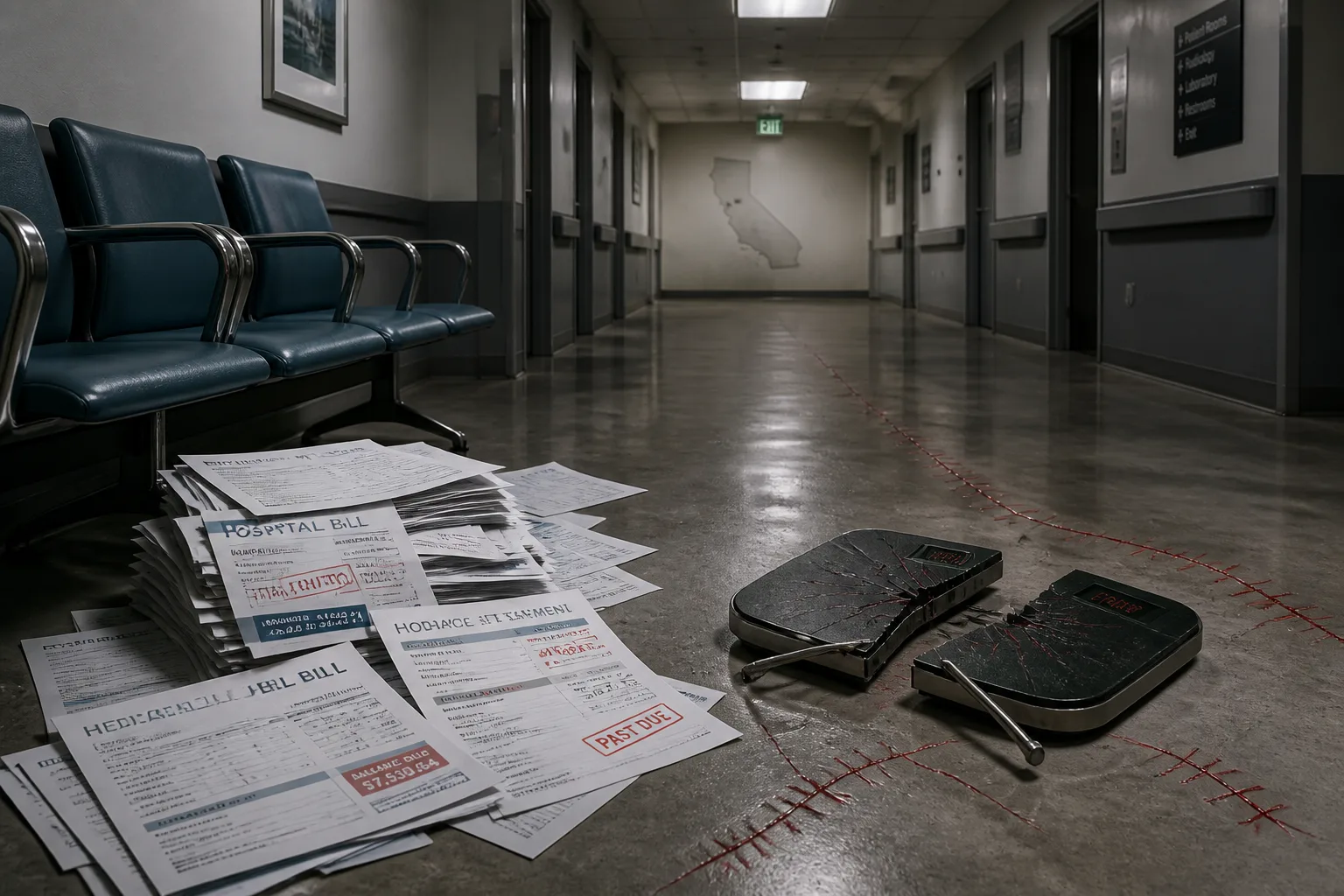
California Faces Surge in Uninsured Patients as Medicaid Cuts Threaten Hospital Stability
California’s health system teeters on the brink of a new crisis as federal and state Medicaid cuts are poised to double the state’s uninsured rate by 2030.
The Trump administration’s 2023 tax law stripped nearly $1 trillion from Medicaid over the next decade, and California officials estimate the state could lose roughly $30 billion a year from Medi‑Cal.
The warning signs are already in plain sight. In 2007, the shuttering of Martin Luther King Jr.–Harbor Hospital in Los Angeles forced neighboring hospitals to absorb a sudden influx of patients, pushing emergency‑department wait times past 11 hours and driving up mortality rates. Experts say the same pattern could re‑emerge as more low‑income Californians lose coverage.
State policy changes only widen the gap. California has introduced work requirements and shortened eligibility periods for Medi‑Cal, while cutting benefits for undocumented immigrants and refugees. According to a report, these adjustments will disqualify many low‑income adults, especially those who cannot meet the new bureaucratic thresholds.
Hospitals are the first line of defense. The California Hospital Association predicts uncompensated care will rise from $2 billion to $4 billion annually. "That’s worrisome," said Carmela Coyle, president and CEO of the association. Hospitals that absorb more unpaid care often cut staff, reduce services such as labor and delivery, or even close emergency departments. "If you don’t have as many (paying) patients, your income as an organization goes down," said Nadereh Pourat, associate director at UCLA’s Center for Health Policy Research.
Private insurers feel the strain too. Congress denied renewal of subsidies for Covered California, the state’s ACA marketplace, and prices surged sharply in January. About 140,000 people have already dropped coverage, and analysts project an additional 176,000 could leave the market. Premiums for the next year are expected to rise nearly 10 percent.
The effect on employer‑sponsored plans remains hotly debated. Some economists argue that hospitals absorb most of the cost of uninsured patients, limiting the impact on premiums. Others point to limited competition in many California regions, allowing hospitals to set high prices. "I don’t know if privately insured patients really get hurt, and I think that’s partly why Americans seem to be comfortable with the fairly inequitable arrangement we have," said Tal Gross, a health economist.
State budget actions add to the pressure. Governor Newsom’s 2026‑27 budget includes a tax on health plans to backfill Medi‑Cal losses, a measure that commercial insurers say will add about $100 per person per year. The budget also delays the worst Medi‑Cal cuts but still imposes reductions that could harm millions.
A 2026 Legislative Analyst’s Office report projects the uninsured rate could rise from about 5 % (roughly 2 million people) to nearly 15 % by 2030, a doubling that would reverse decades of progress. The report notes that eligibility changes are the main driver, but that many people are already leaving Covered California.
The broader implication is clear: more hospitals could face financial distress, leading to layoffs, service reductions, or closures. "It means people live sicker, die younger and are one medical emergency away from financial ruin," said Anthony Wright, executive director of Families USA.
California’s health system is at a crossroads. Federal and state policy changes are tightening the safety net, and hospitals are already feeling the financial squeeze. The next few years will determine whether the state can maintain access to care for its most vulnerable residents.