
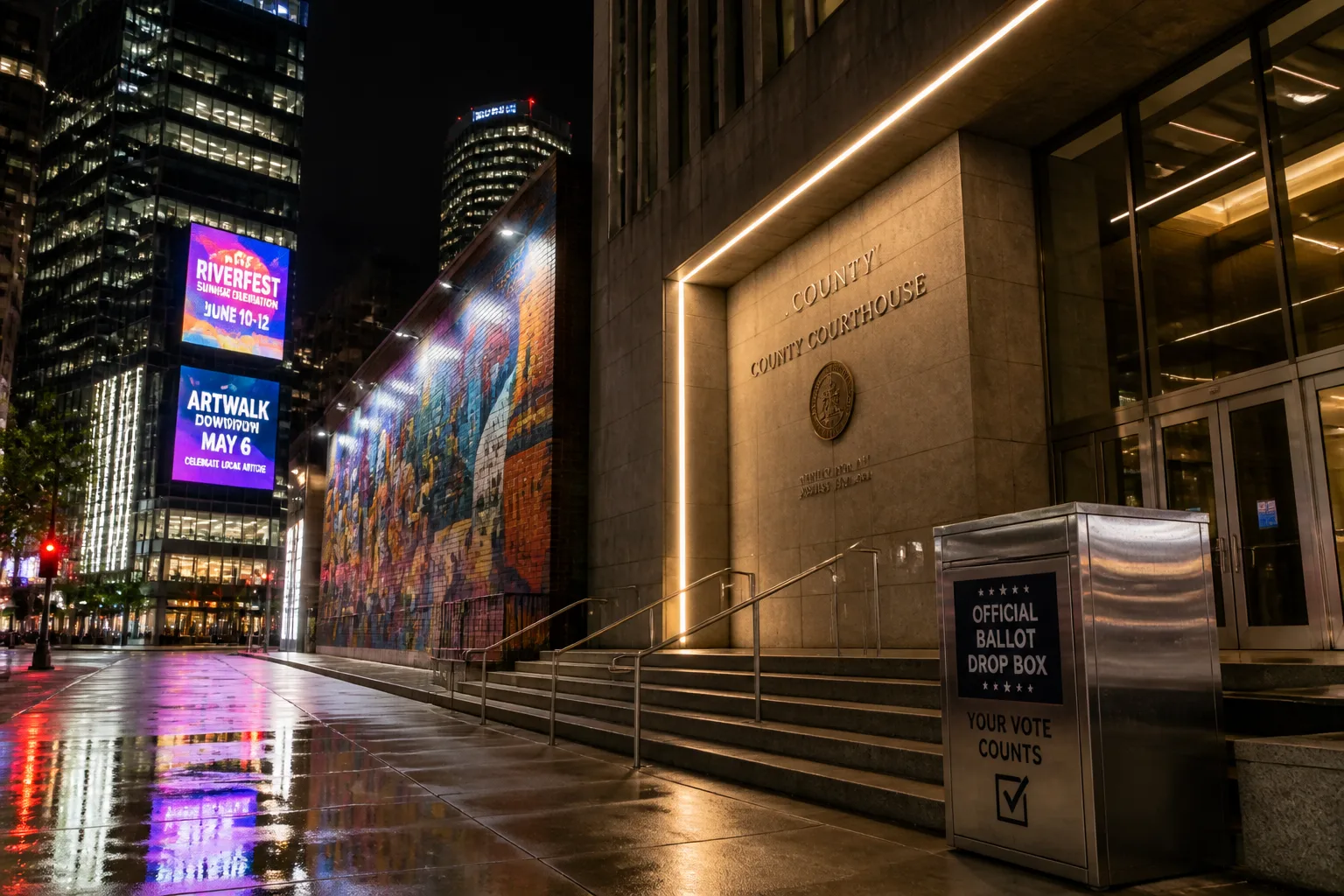
Inglewoods Digital Billboard Battle Reaches Ballot, Court, and Community Frontlines
More than 100 electronic billboards now line Inglewood’s medians and major roadways, turning the city’s streets into a neon grid that has drawn sharp reactions from residents, city officials, and stadium operators. The partnership with WOW Media, launched last year, has netted over $30 million in advertising revenue—a sum Mayor James Butts says has funded pre‑kindergarten programs, senior services, park upgrades and pothole repairs. According to city records, that revenue is less than 1 % of the 2025‑2026 budget of $454,000,109.
The billboards are a key component of Inglewood’s bid to host marquee events, including the 2026 FIFA World Cup, the 2028 Summer Olympics, and the city’s own hosting of Super Bowl LVI last year. SoFi Stadium, the Intuit Dome and the Kia Forum each built their own digital advertising networks, and last year the operators filed a lawsuit seeking to void the WOW Media agreement. They argued that the city had not complied with California’s competitive bidding laws.
A Los Angeles County Superior Court judge rejected most of the stadium operators’ arguments on June 25, 2026. The court also ruled that WOW Media’s proprietary technology exempted it from a competitive bidding process. Hollywood Park, the parent company of SoFi Stadium and the Intuit Dome, said the ruling “raises significant legal questions” and announced an appeal.
The dispute has spilled into the political arena. Two ballot initiatives backed by WOW Media are slated for the November election. One seeks to eliminate much of the city’s digital billboard program, while the other proposes a cap on stadium parking rates and a tax on event tickets. The stadium owners, who lost the lawsuit, are now using the ballot to advance their own interests.
Residents have voiced strong opposition. Long‑time Inglewood resident Dallas Fowler calls the displays “junkie, it’s blight, it is light pollution.” He and others, including Charles Braggs, argue that the billboards distract drivers and alter the city’s appearance. Braggs said the signs “are distracting” and that “you’re trying to read what’s on the sign while driving… so it’s dangerous.” Fowler also noted that trees once lining the medians have been removed to make way for the digital displays.
Supporters of the program point to economic benefits. Sheila Cutchlow, a local homeowner, said the billboards have attracted major brands and helped increase her home value. She added that the advertising revenue has helped her “pass on to my family and my grandbaby.”
City officials have highlighted procedural concerns. Mayor Butts has said that council meetings have been held at 2 p.m. for at least ten years, a schedule he says mirrors that of Los Angeles and the county. Critics argue that the timing makes it difficult for residents to attend and voice concerns.
The city clerk’s office is reviewing petitions for the November ballot. Two of the three petitions are awaiting council approval to qualify, while the third is being examined to verify the legitimacy of signatures.
The outcome of the court case, the ballot initiatives, and the city’s ongoing negotiations will shape Inglewood’s skyline, its budget, and its role as a host for major national and international events. As the city moves forward, residents, business interests, and public officials will continue to weigh the benefits of digital advertising against concerns about safety, community character, and public procurement practices.