California Sets First-In-Nation AI Audit Standards as Governor Newsom Signs New Safeguard Bills
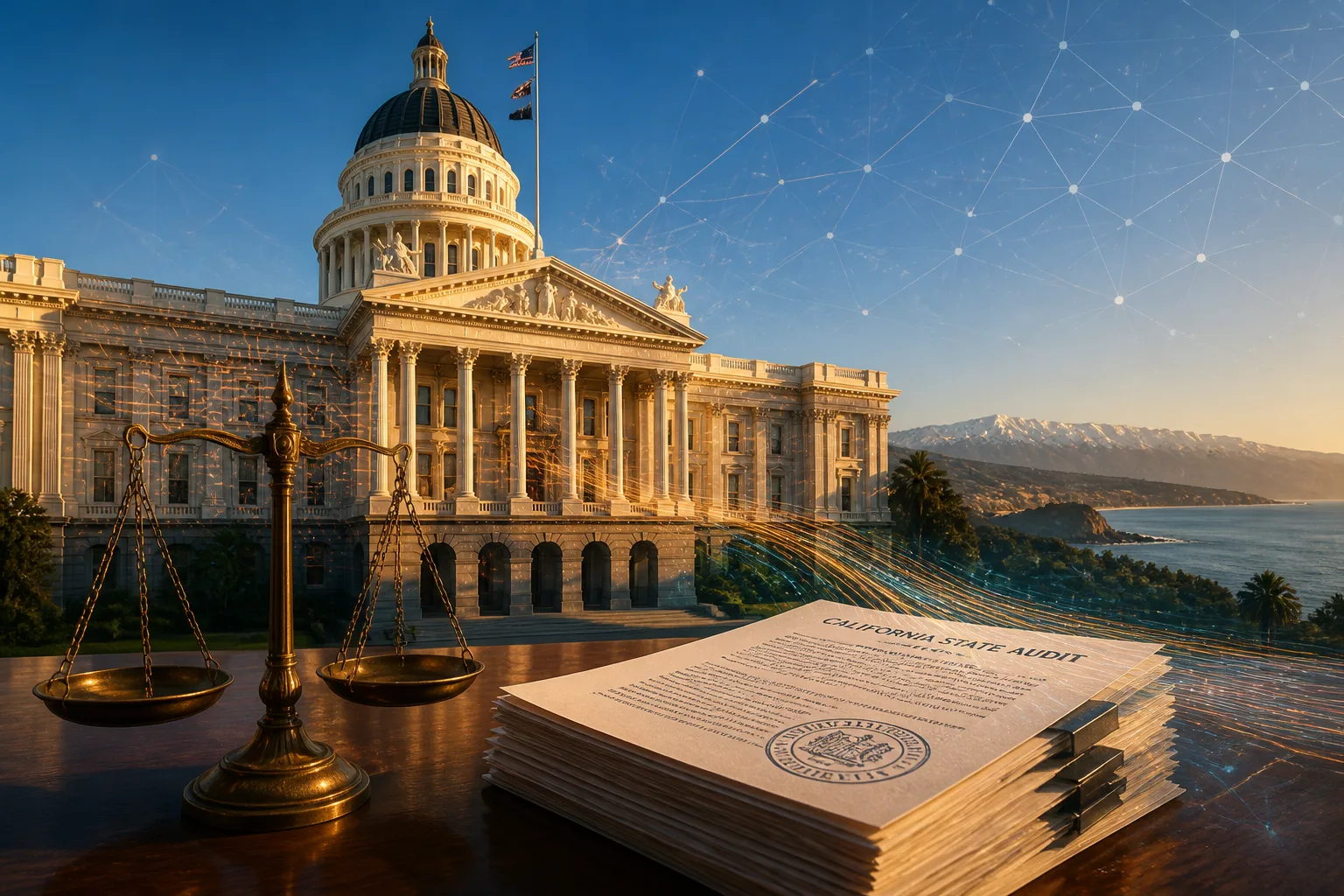
On September 9, 2026, Governor Gavin Newsom signed two landmark bills that set California on a path to become the nation’s first state with a formal, independent AI audit system. Senate Bill 813 (SB 813) and Assembly Bill 1405 (AB 1405) together create a statewide registry of AI auditors and lay out strict standards for independence, transparency and integrity.
SB 813, introduced by Senator Jerry McNerney of Pleasanton, requires any organization that wishes to audit an AI model to meet California‑defined criteria. The bill designates the Government Operations Agency as the lead regulator and mandates that auditors be completely independent of the companies they evaluate. AB 1405, authored by Assemblymember Rebecca Bauer‑Kahan of Orinda, actually establishes the registry, spells out the qualifications auditors must hold, and sets reporting obligations.
The legislation builds on a series of California actions that have positioned the state as a national leader in AI safety. In 2023, Newsom issued an executive order directing state agencies to use AI responsibly and to identify risks to citizens and state workers. The following year, he signed a package of laws that required AI watermarking for deepfakes, set child‑online‑safety standards for AI chatbots, and created a public registry for AI‑generated content.
In 2025, California enacted the Transparency in Frontier Artificial Intelligence Act (SB 53), the country’s most comprehensive frontier‑AI law. SB 53 requires developers of large, high‑impact AI models to publish safety test results, report serious incidents, and protect whistleblowers. The state also passed a bill that strengthened privacy protections for automated decision‑making technology.
Earlier this year, Newsom signed an executive order that raised the bar for AI companies doing business with California. The order increased privacy and civil‑liberties safeguards in state procurement and launched a Tech Fraud Task Force to counter AI‑enabled fraud. In August, the governor announced an AI Cyber Defense Program within the California Cybersecurity Integration Center to use AI for detecting vulnerabilities and supporting incident response.
The new audit framework is intended to address growing concerns about the rapid pace of AI development. According to officials, independent audits will help verify that AI systems comply with existing state laws and that developers are following best practices for safety and bias mitigation.
California’s approach has drawn attention from the federal government. In December 2025, President Trump signed an executive order directing federal agencies to evaluate state AI laws for potential conflicts and to condition certain federal funding on state compliance. The order also exempted state laws related to child safety, data‑center infrastructure and state procurement.
The state’s legislation is the first of its kind in the United States. While other states have enacted AI‑related laws, none have established a formal registry of independent auditors or set state‑wide standards for audit independence.
The bills are expected to take effect on January 1, 2027, giving companies and auditors time to prepare for compliance. The California Office of the Attorney General will oversee the registry and enforce the standards.
In a statement, Newsom said the new laws “protect Californians from the risks we know are emerging from AI” and called on the federal government to adopt similar safeguards.
The legislation marks a significant step in California’s ongoing effort to balance innovation with public safety. It also signals the state’s willingness to set a national example for AI governance.
The next steps will involve the development of detailed implementation guidelines by the Government Operations Agency and the establishment of the registry infrastructure. Companies that develop AI models will need to engage qualified auditors to meet the new requirements.
California’s AI safeguards are part of a broader strategy that includes AI‑powered tools like AskCA, which helps residents navigate state services, and AI‑driven initiatives to improve road safety, housing permits and wildfire detection.
The state’s leadership in AI regulation is expected to influence other states and federal policy as the technology continues to evolve.